July 2026 Legal and Constitutional News What Changed and Why It Matters
Law can feel distant until it changes something ordinary: a phone search, a workplace rule, a student’s rights, a rent dispute, a ballot deadline, or the way a government agency handles benefits. July 2026 brought another reminder that court decisions and constitutional debates do not stay inside courthouses. They shape the rules people live under.
This month’s legal conversation centered on three big themes: how much power courts should give government agencies, where constitutional rights meet new technology, and how states are testing the limits of federal law. Some developments came through court rulings. Others came through new state laws, congressional proposals, and public fights over the meaning of the Constitution.
This article is a plain-English overview, not legal advice. For a specific legal problem, speak with a qualified attorney in your state.
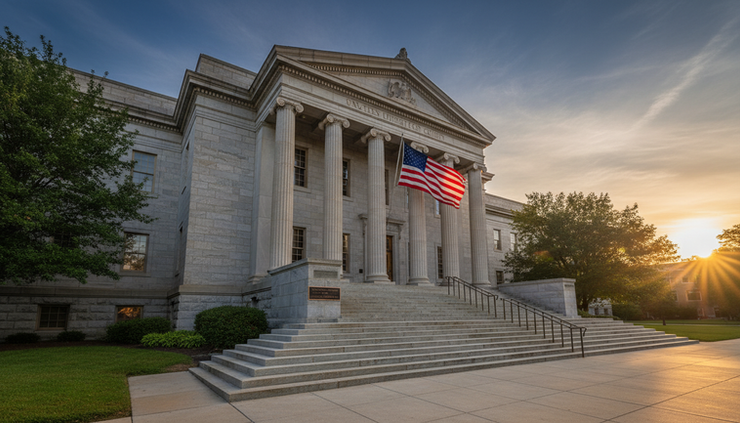
Courts kept reshaping the power of government agencies
One of the most important legal stories of summer 2026 was the continuing fallout from the Supreme Court’s recent shift away from broad judicial deference to federal agencies. In simple terms, courts have become less willing to accept an agency’s interpretation of unclear laws just because the agency has expertise.
That sounds technical, but the real-life stakes are large.
Federal agencies write and enforce rules that affect:
Workplace safety
Student loans
Environmental protections
Health care programs
Consumer finance
Internet and communications policy
Retirement plans
Immigration procedures
When courts take a more active role in reviewing agency decisions, businesses and individuals may challenge more rules. Agencies may also write narrower rules because they know judges will read the underlying statute closely.
For everyday life, this can mean a few different things.
A worker might see workplace protections delayed while a rule faces litigation. A borrower might wait longer for clarity on a student loan program. A small business might get temporary relief from a federal rule, but also face uncertainty because the rule could return in a different form.
The big constitutional debate is about who should make major policy choices. Supporters of stronger judicial review say unelected agencies should not decide major issues unless Congress clearly gave them that power. Critics worry that courts are replacing expert judgment with legal second-guessing, especially in areas like public health, pollution, and financial regulation.
The result is a legal system with more power moving back toward Congress and the courts. That may sound like a civics textbook point, but it affects how quickly the federal government can respond to new problems.
State laws became the front line for national policy fights
July also showed how much legal change now happens at the state level. When Congress is divided, state legislatures often move first. That creates a patchwork of rules across the country.
This is especially clear in issues such as:
Abortion access and reproductive health
Gender identity policies in schools and public programs
Voting procedures
Criminal justice
Data privacy
Book access and curriculum rules
Firearms regulation
Homelessness and public camping laws
A person’s rights and obligations can look very different depending on where they live. A family moving from one state to another may find different school policies. A voter may face different registration deadlines or ID rules. A patient may need to travel for care that is legal in one state but restricted in another.
This patchwork has led to more constitutional lawsuits. Many ask the same basic questions:
Did the state go beyond its authority?
Did the law violate free speech, equal protection, due process, or another constitutional right?
Does federal law override the state rule?
Did lawmakers write the law clearly enough for people to follow?
These cases matter because a trial court decision can block a law within days, while an appeals court may later revive it. People living under the law often face uncertainty during that process.
For example, when a court pauses enforcement of a new state statute, public agencies may stop applying it, schools may revise guidance, and lawyers may tell clients to wait for the next ruling. Legal uncertainty becomes practical uncertainty.
Technology pushed privacy law into harder questions
Technology has outpaced many older legal rules. July’s legal debates reflected that gap.
Courts and lawmakers continue to wrestle with how the Fourth Amendment applies to modern data. The Fourth Amendment protects against unreasonable searches and seizures, but it was written long before smartphones, location tracking, connected cars, smart doorbells, and cloud storage.
The basic question is simple: When does the government need a warrant to get personal digital information?
That question can arise with:
Cellphone location records
App data
Home security camera footage
Genetic databases
License plate readers
Facial recognition tools
Messages stored in the cloud
Data collected by cars and wearable devices
The answer affects far more than criminal investigations. It also shapes what people can expect when they use everyday technology.
A phone can reveal where someone sleeps, worships, works, shops, studies, and receives medical care. A car may record travel patterns. A smart home device may keep logs that reveal when someone is at home.
Courts have already recognized that some digital records deserve strong privacy protection. The hard part is deciding where to draw the line as new tools appear.
Lawmakers are also trying to update privacy laws. Some proposals would require clearer consent before companies collect sensitive data. Others would limit how businesses sell or share location data. States have taken different approaches, which means privacy rights can vary by place.
For consumers, the practical takeaway is direct: legal privacy protections are growing, but they are uneven. Reading app permissions, limiting location tracking, and using privacy settings still matter because the law may not fully protect every kind of data.
Free speech disputes moved beyond the town square
Free speech cases no longer focus only on protests in public parks or newspapers criticizing public officials. Many current disputes involve schools, online platforms, public libraries, government employee speech, and state laws that regulate online content.
The First Amendment limits what the government can do. It does not usually control what private companies allow on their own platforms. That distinction often gets lost in public debate.
Here is the plain version:
Government censorship issue
Private platform issue
Mixed issue
A public official punishes speech because of its viewpoint.
A private company removes or limits content under its own rules.
Government officials pressure or coordinate with private platforms in ways that may affect speech rights.
July’s constitutional debates continued to focus on that mixed area. Courts have had to ask when government communication becomes coercion. A government official can criticize harmful content. But if officials pressure a platform to suppress lawful speech, First Amendment concerns grow.
Schools brought another layer of debate. Public schools have authority to maintain order and protect students, but students do not “shed” constitutional rights at the schoolhouse gate. Disputes over library books, classroom discussions, student protests, and online comments often turn on context.
For families, educators, and students, these cases affect daily life. They shape what schools can regulate, what students can say, and how public institutions make decisions about access to information.

Voting rules stayed under the microscope
Election law rarely takes a break, especially in a national election cycle. July 2026 brought continued attention to voting access, ballot rules, district maps, and election administration.
These disputes often sound procedural, but procedure can decide whether a person successfully casts a ballot.
Legal fights may involve:
Voter registration deadlines
Mail ballot rules
Signature matching
Drop box access
Proof-of-citizenship requirements
Polling place changes
Ballot design
Challenges to voter rolls
Redistricting claims
The constitutional issues may include equal protection, due process, free speech, and the Elections Clause. Federal statutes such as the Voting Rights Act can also come into play.
For voters, the impact is practical. A court order can change a deadline, restore a voting method, or block a new requirement shortly before an election. That can create confusion. Election officials must train workers and update public instructions quickly.
The best real-world habit is simple: check voting rules through an official state or county election website close to Election Day. Old information can be wrong after a court ruling.
Criminal justice rulings focused on punishment, policing, and fairness
Criminal law continued to raise some of the country’s hardest constitutional questions. These disputes often involve the Fourth, Fifth, Sixth, Eighth, and Fourteenth Amendments.
July’s broader criminal justice conversation included several recurring issues.
Police searches and digital evidence
As more evidence comes from phones, vehicles, and online accounts, courts have to decide when police need a warrant and how broad that warrant can be. A search of one device may reveal years of private life.
The issue is not whether police can investigate crime. They can. The issue is how to protect privacy while allowing lawful investigations.
Bail and pretrial detention
Courts and lawmakers continue to debate when a person accused of a crime can be held before trial. Supporters of bail reform argue that wealth should not decide freedom. Critics worry about public safety and court appearance rates.
For ordinary people, these rules matter if they or a family member gets arrested. Pretrial detention can affect jobs, housing, child care, and the ability to prepare a defense.
Sentencing and cruel punishment claims
The Eighth Amendment bars cruel and unusual punishments. Courts often review whether a punishment is excessive, especially for juveniles, people with serious mental illness, or nonviolent offenses.
These debates reflect a larger question: when should the law punish, and when should it focus on rehabilitation, treatment, or supervision?
Congress debated guardrails for courts and the executive branch
Not every important legal development comes from a court. Congress also plays a central role in constitutional law, even when legislation does not pass right away.
In July 2026, national debates continued over the balance of power among the branches of government. Many proposals and hearings focused on executive authority, court ethics, emergency powers, agency funding, and oversight.
The Constitution separates power among Congress, the president, and the courts. The idea is to prevent too much power from resting in one place. In practice, the lines are often contested.
Common flashpoints include:
How much independence federal agencies should have
Whether Congress can limit emergency declarations
How courts should handle nationwide injunctions
What ethics rules should apply to judges
How presidents may remove executive officials
Whether Congress has enough access to executive branch records
This may sound abstract, but checks and balances affect daily life. If a president can act quickly during an emergency, aid may move faster. If that authority is too broad, individual rights may be at risk. If courts can block a federal policy nationwide, people in every state may see immediate effects. If courts cannot, rights may vary while cases wind through appeals.
What the month means for everyday life
The main story from July 2026 legal developments is not one case or one statute. It is a broader shift toward more legal uncertainty, more state-by-state variation, and more constitutional litigation over daily life.
That means people should watch for legal changes in areas that affect them directly:
At work
Agency rules and state labor laws may affect pay, safety, benefits, and leave policies.
At school
Free speech, curriculum, student privacy, and anti-discrimination rules may differ by state and district.
Online
Privacy protections, platform rules, and government access to data remain unsettled.
At the ballot box
Voting procedures can change after legislation or court orders.
In health care
State and federal legal disputes may affect access, coverage, and privacy.
In encounters with police
Search rules, digital evidence standards, and pretrial laws can affect rights and outcomes.
The practical move is to treat legal news as more than politics. Look for what changed, where it applies, when it takes effect, and whether a court has paused it.

The big takeaway
July 2026 Legal and Constitutional News What Changed and Why It Matters comes down to one simple point: the law is moving closer to everyday decisions. Courts are reading agency power more closely. States are setting different rules on major rights questions. Technology is forcing privacy law to catch up. Voting, speech, policing, and executive power remain active battlegrounds.
For readers trying to make sense of it all, the best question is not only “Who won?” The better question is, “What rule applies now, where does it apply, and how could it affect daily life?”
That question turns legal headlines into useful information.


Comments